Nobel laureates advocate more scientific exchanges to improve ties between China and the West
Four Nobel laureates attended dinner in Hong Kong co-organized by Brillix Limited
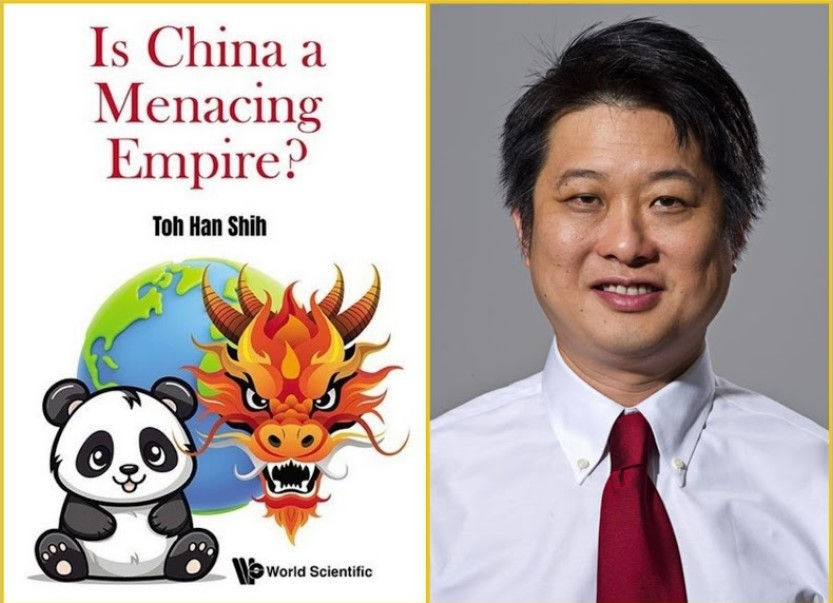
Toh Han Shih
Three Nobel prize winners called for more exchanges of scientists between China and Western nations, in the midst of tense relations between China and the US as well as some other Western nations.
The three Nobel laureates are Sir Gregory Paul Winter, Stefan Hell and Sir Richard Timothy Hunt. They were among the four Nobel laureates to grace the Evening with the Nobel Laureates and Molecular Frontiers, a symposium including a dinner at the China Club in Hong Kong on November 15, 2024. The fourth Nobel laureate is Karl Barry Sharpless, an American chemist who was a co-winner of the Nobel prize in chemistry twice in 2001 and 2022. The four Nobel laureates participated in the Molecular Frontiers Symposium at the Hong Kong University of Science and Technology in the morning of November 15, 2024.
“The Hong Kong Biotechnology Organization was one of the co-sponsors of this event, so we co-hosted and welcomed these famous scientists in the evening,” said Albert Yu, chairman of the Hong Kong Biotechnology Organization (HKBIO).
While HKBIO has invited Nobel prize winners to Hong Kong many times, “it is really rare to invite four Nobel prize winners at a time,” said Yu.
There are tensions between some Western nations and China, said Winter, a Nobel prize-winning English molecular biologist. “There are forces that are driving us apart. It is important for individuals to create the personal connections to bring them back together.”
“Hopefully we have to try to do that. The main thing is for people to maintain a dialogue and visit each other’s laboratory and make it easy to do so,” said Winter, who was a co-winner of the Nobel prize for chemistry in 2018.
Winter cited his recent experience in speaking at the Chinese Academy of Sciences in Beijing. He tried to obtain a visa in order to be able to visit Beijing. The process was so onerous that it took him nearly a day to fill in the application form. He was so exasperated by the difficulty that for a while, he thought of not going to Beijing. Subsequently, he was advised there was a special transit arrangement where he could spend 144 hours in transit in Beijing without a visa. So he finally went to Beijing to speak at the Chinese Academy of Sciences.
“The bureaucracy can sometimes be very difficult. Governments can make it easier to help people make contact,” said Winter, who won the Nobel prize for creating a method to develop new proteins, which has led to new drugs.
“It is very important to talk to each other. Having mutual visits is very important to understand each other’s culture and needs,” said Hell, a Romanian-German physicists who won the Nobel prize for chemistry in 2014 with two other scientists.
“China is a very important economy in the 21st century. Everyone in the US and Europe will benefit from the prosperity that is being built in China,” said Hell, who enabled microscopes to see finer detail than before, such that microscopes can track processes in living cells.
“The unfriendly view of the UK towards China is a big change from 10 years ago. The old Tory government of David Cameron was pro-China,” said Hunt, a British biochemist and molecular physiologist who was a co-winner of the Nobel prize for physiology or medicine in 2001.
Cameron, a member of the Conservative party, was UK prime minister from May 2010 to July 2016. Trade and investment between China and Britain could benefit further from a "golden era" in their bilateral relations, Prime Minister Cameron said in October 2015, shortly before Chinese President Xi Jinping made a state visit to the UK.
Since then, relations between the UK and China went downhill due to issues like human rights. In November 2022, British Prime Minister Rishi Sunak declared that the “golden era” of Sino-British relations was over, as he vowed to take a tougher stance towards China.
“Why this sudden shift, I don’t understand,” said Hunt, who won the Nobel prize with two other men for their discoveries related to the cell cycle and cell division.
The discoveries of Hunt and the other two co-winners of the Nobel prize, Leland Hartwell and Paul Nurse, opened new possibilities for improved cancer treatment.
Hunt said that the Western propaganda against China reminded him of George Orwell’s novel 1984. This novel features a totalitarian society which resorts to propaganda, the Thought Police and Ministry to control what people think.
It was “like you have to have an enemy,” Hunt said.
The co-organisers of the Evening with Nobel Laureates and Molecular Frontiers were Brillix Limited, Ausvic Capital (a technology investment management institution), HKBIO (a Hong Kong non-profit organization which organizes biotechnology events), BIOHK and Brillix Limited. BIOHK and Brillix Limited organize events in the biotechnology sector.
Toh Han Shih is a director of Brillix Limited.